
I have always been an avid writer, but Marina was the first piece of fiction I was able to write until completion. Below are some tips and tricks that helped me get all 72,000 words down on paper. If you’re easily distracted and prone to writer’s block like I am, these tips may be able to help you too!
Using Pinterest and Storyboarding for Inspiration
When I was stuck in a writing rut or seeking inspiration, Pinterest was a great resource. I collected images that resonated with me and my story, including:
- Pictures that reminded me of my characters
- Photos of settings in the novel
- Anything that captured the “vibes” and aesthetics of the story
- Quotes, poems, etc. that related to the story
No matter what genre you’re writing in, there are endless sources of visual inspiration available. Keeping this content organized in one place allows you to revisit it any time you’re feeling uninspired.
Additionally, these images can be used for storyboarding on a website such as Milanote, Google Slides, PowerPoint, or even printed out and taped to posterboard. This way, they can be combined with textual descriptions or notes to reference later. Personally, I used Milanote as my hub for outlining. This allowed me to create an interactive board for brainstorming, creating character outlines, and fleshing out the settings of my novel.
YouTube Videos of People Walking Around Different Cities
If your book takes place in a real-world location, chances are that there is a video of someone walking around said place on YouTube, such as this video of New York City in the rain (so specific!).
If Google Maps isn’t enough, these videos can help you see through the eyes of your character. Whether you’ve been to the location before or not, this can be a great way to immerse yourself in the plot of your novel.
Though this may not be as directly useful for a fantasy setting, it can still be useful to get the vibe of cities or unusual terrain you were inspired by.
Tracking Word Count using Google Sheets or Excel – Gamify it!
Tracking your daily wordcount in Sheets or Excel can allow you to see a visual representation of your progress towards your writing goal. I originally created a tracker in Sheets just for NaNoWriMo but ended up expanding it for other months as well. This tracker automatically creates a pie chart that will fill up as you write, helping you to really see your daily progress!
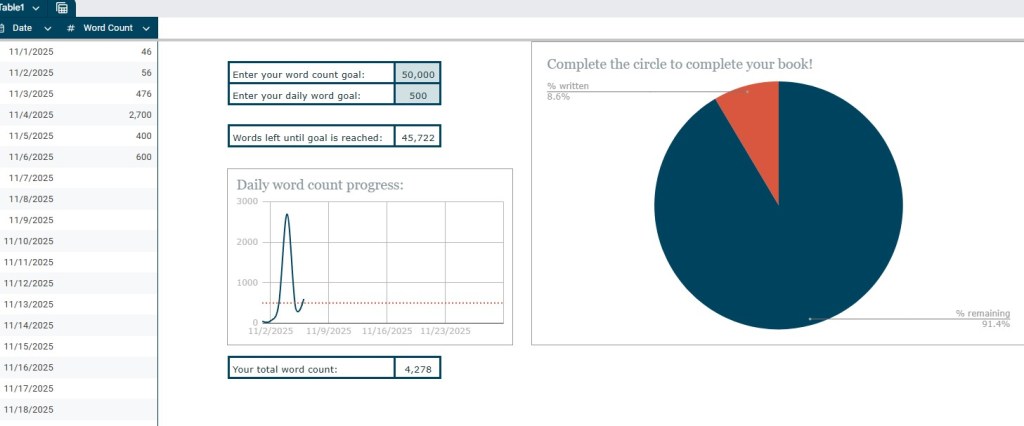
If you would like to use this tracker, make a copy of it. Then, you’ll be able to edit it, remove the sample data, and insert your own word counts.
The Word Counter Max Extension for Google Sheets
The Word Counter Max extension for Sheets is a free-to-use plugin that keeps track of your word count progress during writing sessions. You can set a session word count goal as well as a total word count goal, and then watch the progress bar fill as you write.
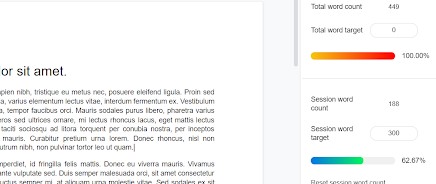
Setting aside an hour or two every day for writing, then setting a word count goal for these sessions, is a great way to keep yourself disciplined. Even if you do not meet the goal every time you sit down to write, this can be a beneficial way to keep yourself in check. Set a goal, fill up the progress bar, and treat it like your job! Or a video game, whichever is more motivational.
Making a Playlist for Your Book
Similar to how I used Pinterest, when I was seeking inspiration for my story, I found that listening to music that reminded me of my novel was very useful. This included:
- Music I thought my characters might listen to
- Music I thought my audience might listen to
- Music that might play in the background if my novel was a movie
- Lyrics that resonated with the plot of my book
Not only is it fun to create a themed playlist, but it can definitely set the mood for writing. Typically, I would listen to my lyrical playlist while collecting inspiration on Pinterest or storyboarding. Then, when I was actually writing, I would switch to some instrumental music that matched the tone of the scene – such as fast paced classical or electronic music for action scenes, or soft piano for romantic ones.
Hopefully, some of these tips will prove as useful to you in your writing journey as they were to me!
Happy writing,
Julienne
 Julienne Smith | Author
Leave a comment